



How to Build a Supply Chain That Can Handle What’s Next: Key Takeaways from GTNF 2026
At the Global Tobacco & Nicotine Forum (GTNF) 2026, Dymapak’s CEO and founder Ross Kirsh joined industry leaders for the panel “Global Supply Chain: Challenges and Opportunities for Suppliers in the Industry.”
The conversation focused on a question every company operating in a regulated market is asking: How do you build a supply chain that can keep moving when the next disruption is impossible to predict?
If you didn’t make it to GTNF, here’s the short version of our panel discussion on what global nicotine brands should be thinking about now.
Quick Hits: How can nicotine brands build a more resilient supply chain?
- Get packaging in the room on day one. Packaging affects tooling, filling equipment, sourcing, compliance, cost, and speed to market. The earlier those decisions happen, the more options you preserve.
- Treat regulation as your main supply chain constraint. A regulatory change can narrow your packaging, supplier, equipment, and manufacturing options overnight. Build regulatory readiness into your supply chain strategy from the start.
- Evaluate sourcing by flexibility, not just unit price. Tariffs, freight, lead times, geographic concentration, and disruption risk can quickly erase a lower upfront price. The better question is: What options does this sourcing decision give us?
- Build for disruption instead of trying to predict it. You don’t need to know what the next shock will be. You need qualified suppliers, manufacturing regions, and backup routes you can turn to when it happens.
When should I involve my packaging supplier in supply chain planning?
Packaging should be involved from day one—not after the product and supply chain have already been mapped out.
- Bring packaging into the conversation too late, and you may discover that an otherwise finished product requires new tooling, won’t run on existing equipment, can’t be manufactured in another region, or needs additional testing before launch.
- Before locking in a product or supply chain strategy, ask whether the packaging can meet future compliance requirements, run on existing equipment, be sourced from more than one supplier or region, and adapt if tariffs, freight, or regulations change.
The Bottom Line: Get packaging in the room on day one. The more options you preserve upfront, the more resilient your supply chain becomes.

How can nicotine brands reduce supply chain risk from regulatory changes?
Plan for where regulation is going—not just what’s required today. Regulatory changes can quickly narrow your packaging and production options, so resilience starts before new requirements take effect.
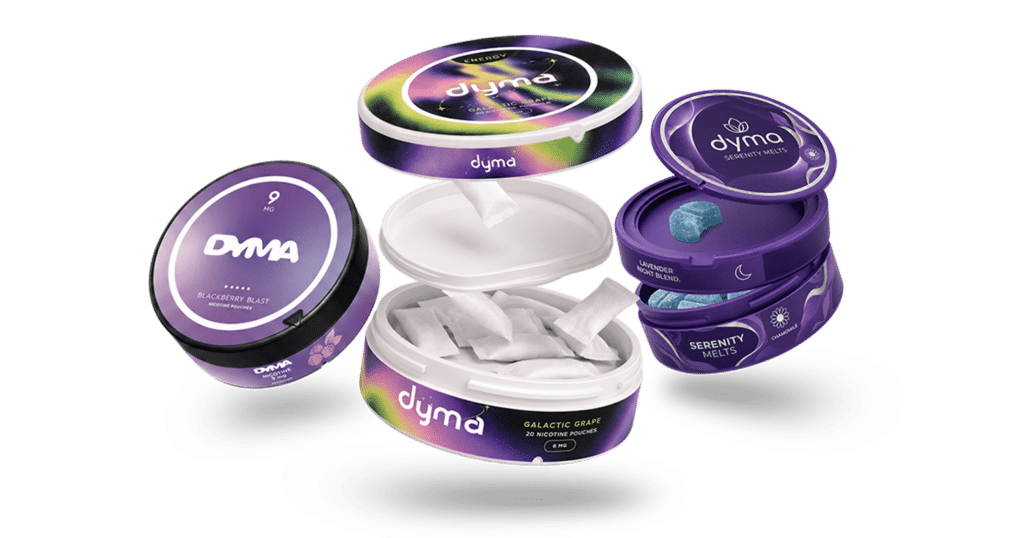
- Build for tomorrow’s compliance standard. A solution designed around today’s regulatory standards may require a costly overhaul tomorrow. Dymapak’s Child-Resistant nicotine can is built with that direction in mind—giving nicotine pouch brands a certified Child-Resistant format as regulators in the U.S. and Europe move toward stronger packaging safeguards.
- Verify compliance early. Make sure certifications, testing, and documentation exist before committing to packaging or inventory.
- Qualify alternatives now. Backup suppliers and manufacturing regions only create resilience if they can meet the same regulatory requirements.
- Think through scale early. SKU count, customization, print methods, and production volumes can limit your options as the business grows.
The Bottom Line: Look to tomorrow’s packaging standards to make regulatory change something your supply chain can adapt to—not something that sends you back to square one.
What should I look for when choosing a nicotine packaging supplier?
The right supplier shouldn’t just give you a price. They should give you options.
When evaluating suppliers, ask:
- Can production shift to another region if tariffs or trade conditions change?
- Is there a second qualified supplier that can produce the same packaging?
- How exposed are you to freight disruption or a single shipping route?
- What are the lead-time and inventory implications of sourcing from that location?
- How easily can you scale or shift production if demand changes?
Don’t look at unit price alone. A lower unit price can lose its advantage quickly when tariffs, freight, lead times, or disruption enter the equation. A slightly higher-cost option delivers more value if it gives you greater flexibility.
At Dymapak, we’ve built our supply chain around flexibility, with manufacturing options across North America, South America, Europe, and Asia. That allows us to evaluate where a project makes the most sense today—and where production could move if conditions change.
The Bottom Line: The strongest supplier relationships create options before either side needs to use them. Look at what a sourcing decision lets you do—not just what it costs today.
How can Dymapak support my supply chain’s resiliency?
One theme kept coming up throughout our GTNF conversation: options matter.
- A global manufacturing network. Our network spans North America, South America, Europe, and Asia, giving us flexibility to evaluate production based on capability, compliance, cost, lead time, and logistics—not geography alone.
- A partnership built around planning ahead. We work with regulated brands to share forecasts, identify constraints early, and develop contingency plans before they become emergencies.
We can’t make supply chain disruption disappear–no one can. But we’ve built our certified Child-Resistant products and global supply chain to give regulated brands more ways to respond when circumstances change.
The most resilient supply chain isn’t the one that predicts the next disruption. It’s the one that gives you somewhere to go when the plan changes.
The goal isn’t to predict the next shock. It’s to be ready for it.
WORK WITH US
Let’s Strengthen Your Supply Chain
Ready to build more flexibility into your supply chain with Dymapak? Contact us by filling out the form or by calling us at 917-210-1067.